Centyent AI
Intro
Centyent is working on an AI-powered clinical reasoning product that is designed to integrate with existing healthcare systems, supporting clinicians in making faster, more accurate diagnoses and ultimately improving patient outcomes. We were brought in to research the space and present our findings and protoype suggestion back to the business.
User Experience
Product Design
UI/UX Design
User Interviews
User Flows
Prototyping
Year
/
2026
Client
/
Centyent AI
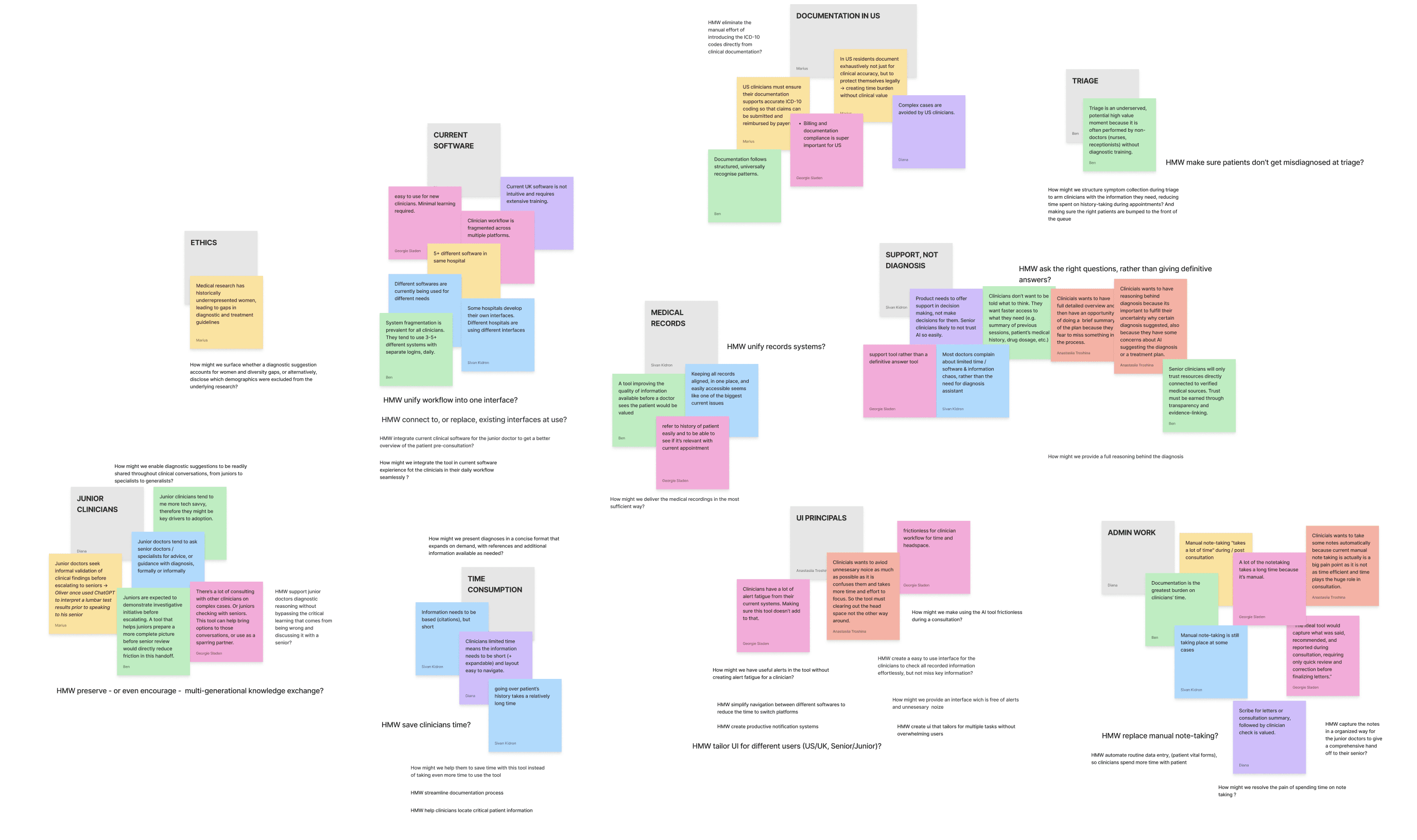
DISCOVERY PHASE Our starting point was discovering the reality of clinical work itself. Through a research sprint combining clinician interviews, stakeholder sessions, competitor analysis, and desk research, we set out to understand how clinicians move through diagnosis, treatment, and documentation - where the friction lives, and where an AI assistant could add genuine value rather than noise to an already demanding workflow.
STRATEGY & REFRAMING From our findings, we translated key insights into opportunities, challenges and barriers using concept boards. What became clear was that diagnosis is rarely a solitary act - clinicians draw on accumulated knowledge, consult peers, and layer in independent research, often simultaneously and under significant time pressure. It is as much a social and experiential practice as it is a clinical one. This reframing shifted our thinking away from simply surfacing information, and towards designing an assistant that understands the collaborative, high-stakes nature of clinical decision-making - and from there, our problem statement came into focus.
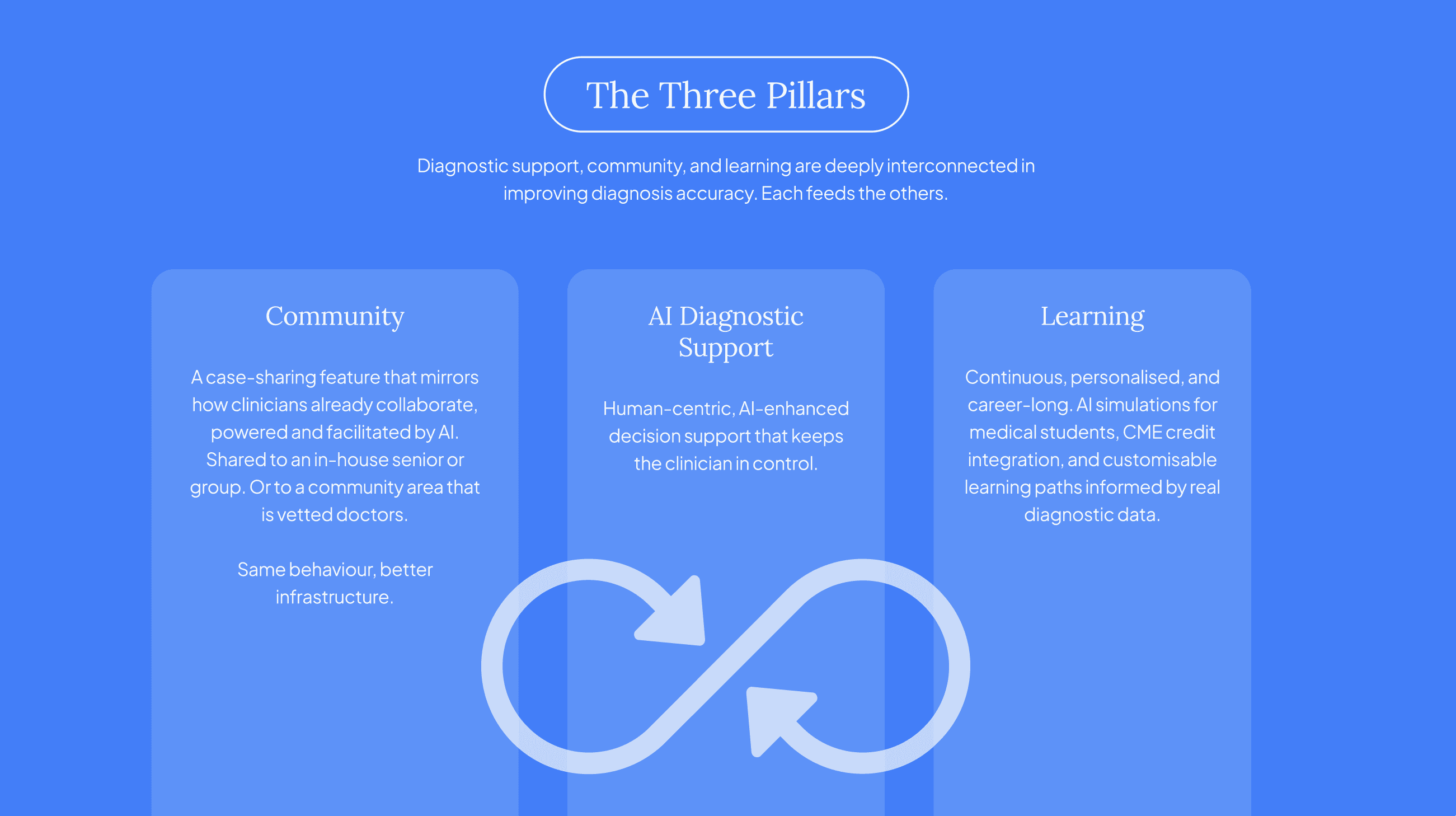
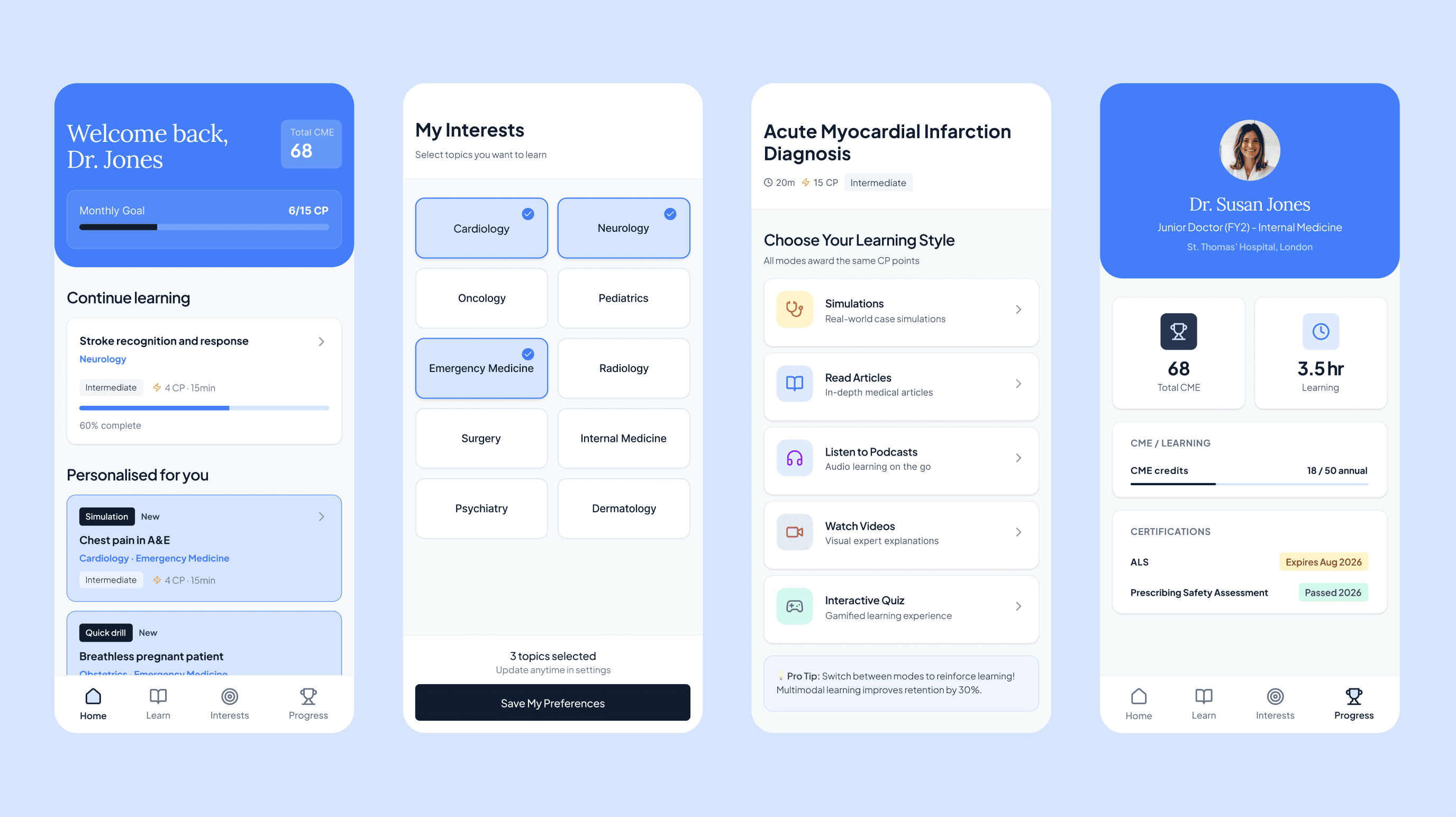
FEATURES & PROTOTYPING With a clear problem statement in place, we moved into prioritisation before translating our findings into two prototype directions. The first explored a second-opinion AI model combined with a case-sharing community - giving clinicians a trusted space to sense-check decisions and learn from peers. The second was a mobile-first learning tool designed to work in tandem with the diagnostic assistant, supporting ongoing professional development in the moments between consultations, not just during them.
ADOPTION One of the sharpest insights from our research was that adoption and onboarding represented one of the greatest barriers to introducing a new tool into clinical workflows. So rather than asking clinicians to learn an entirely new interface, we flipped the approach. What if Centyent adapted to the clinician, not the other way around? During onboarding, users select the EMR system they already work with, and Centyent mirrors that familiar UI, layering its own features: case sharing, second opinion AI, and community - on top of an environment they already trust. For our prototype, we replicated the Cerner interface, as it was the system most commonly referenced across our interviews.
DELIVERY We closed the project with a full handover to the in-house team, translating everything we had uncovered into clear, actionable strategy backed by research evidence. Alongside our findings, we delivered mid-fidelity prototypes that brought our concepts to life with enough detail to communicate intent and interaction, without being so prescriptive that they couldn't be built upon, iterated, or challenged. The goal was to leave the team with a strong, well-evidenced foundation they could move forward from with confidence.